
A deep cleaning is only as good as its checklist. Without one, it is easy to spend an hour on the kitchen counters and never touch the top of the refrigerator, the dryer lint buildup or the dust on the smoke detector. This list comes from the work Josiane Santos does in real homes, after about eight years of cleaning for other people.
Use it to clean your own home over a weekend, or to compare what different cleaners include before you book. Every item on it is something that builds up slowly in Massachusetts homes, from Boston condos to family houses in Mansfield.
Before you start: the order that saves time
Work top to bottom and dry to wet. Dust ceiling fans, light fixtures, smoke detectors and the tops of door frames first, so anything that falls lands on surfaces you have not cleaned yet. Then do vertical surfaces like cabinet faces, walls and switches. Floors always come last.
Start any product that needs time to work before you clean something else. Spray the oven, the shower glass and the tub, then go dust the bedroom while they soak. Letting a cleaner sit is far easier than scrubbing harder, and it protects the surface.
Kitchen
The kitchen holds the most grease and the most hidden crumbs. Clean the stovetop grates and burner caps, the range hood and its filter, the sides of the stove where splatter runs down, and the backsplash. Wipe the cabinet faces and handles, which collect a sticky film from cooking. Clean the inside of the microwave, including the door, where dried splatter hides.
If you are doing the full job, empty and clean the oven and its racks, the inside of the refrigerator with its shelves, drawers and door gasket, and the inside of the cabinets and drawers. Do not forget under the sink, where small leaks leave stains, the dishwasher door edge, and the floor under and beside the appliances, where dust and food collect for months.
Finish with the sink, the faucet and the drain area, then stainless surfaces with a streak free wipe going with the grain.
Bathrooms
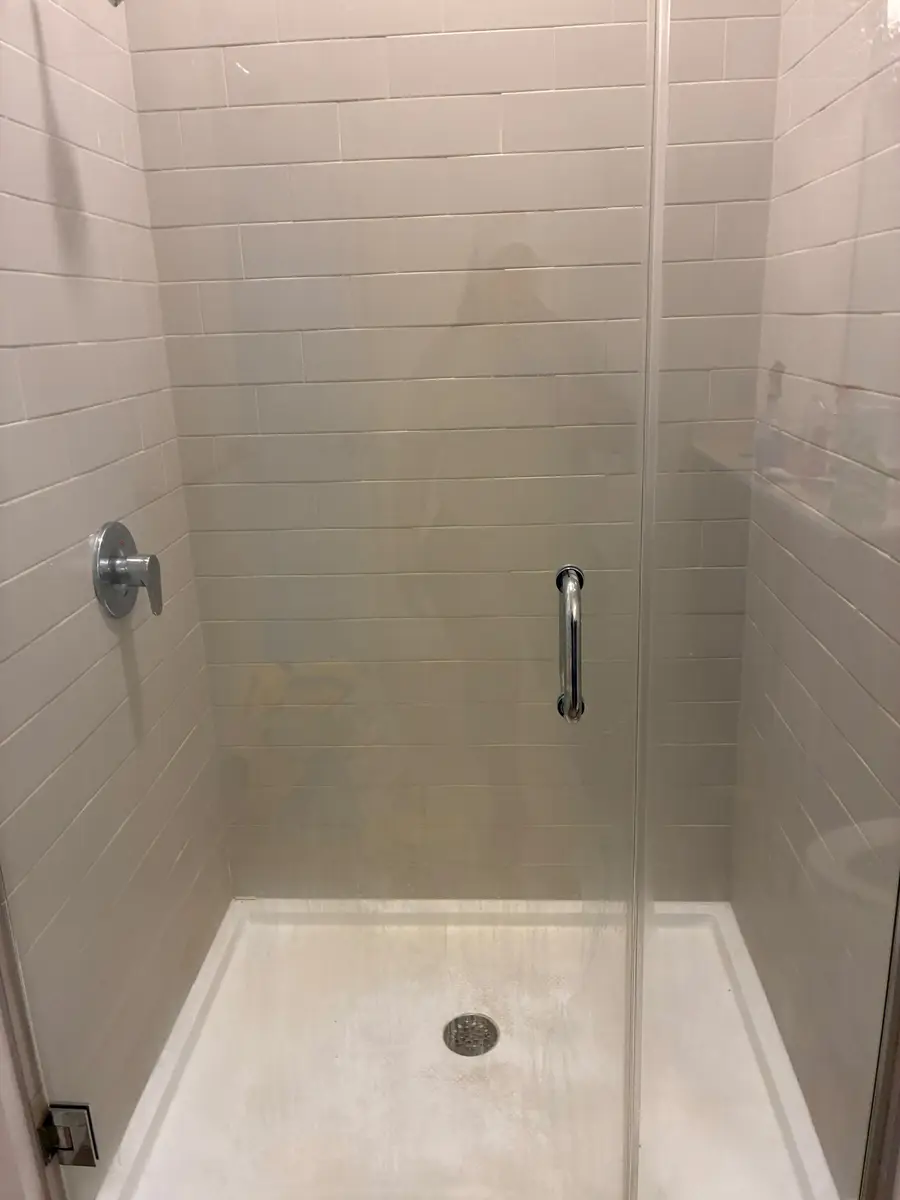
Bathrooms are where a deep cleaning shows the biggest change. Soak and scrub the shower pan or tub to remove soap scum, clean the grout lines, and treat the glass door for hard water film. Clean the shower head face, the faucet handles and the drain cover.
Scrub the toilet inside and out, including the base, the hinges of the seat and the floor around it, where most bathroom odor comes from. Clean the sink, the overflow holes, which collect grime nobody sees, and the counter around the faucet. Wipe the mirror, the light fixture and the exhaust fan cover, which gathers dust that blows back into the room.
Inside the vanity, wipe the shelves and look for leaks or rust stains. Clean the baseboards, the door and its frame, and the light switch before mopping the floor.
Bedrooms and living areas
Dust the ceiling fan blades on both sides, light fixtures, the tops of door frames, picture frames and shelves. Wipe light switches, outlet covers and door handles, which get touched every day and rarely cleaned. Clean window sills, the window frames and the tracks.
Wipe the baseboards all the way around. In older Boston and Cambridge homes with radiators, dust behind and under them, since heat moves that dust into the air every winter. Vacuum under the bed and furniture, along the edges of the room and under cushions, then mop or vacuum the floor.
Check closets too. Shelves and closet floors collect a surprising amount of dust, especially in the bedrooms of triple-deckers and older apartments with small closets packed tight.
Laundry and utility areas
Laundry rooms get ignored, and they matter. Clean the lint trap and the area around it, wipe the dryer door seal and the drum, and check the vent area behind the dryer for lint buildup, which is worth watching for safety. Clean the washer detergent tray and the door gasket, where mildew likes to grow in humid Massachusetts summers.
Wipe the wall behind the washer, the hookups and the utility shelves. Dust the electrical panel cover, the water heater area and any cables or vents in the utility closet. These spaces are small, but they add a lot to how clean the whole home feels.
Entryways and the finishing touches
In a Massachusetts winter the entryway takes a beating. Salt, sand and slush end up on the floor, the mat, the bottom of the door and the baseboards near it. Clean the door inside and out, the door track if you have a sliding door, and the floor where salt leaves a white film.
Finish with a walk through the home looking up, then down. Smoke detectors, vents, door tops, and the floor in the corners are the last places dust hides. Then take out the trash and recycling so nothing undoes the work.
When to hand the checklist to someone else
A full deep cleaning of a three bedroom home can take one person a long day or most of a weekend. If time is short, or the oven, the shower and the laundry area all need serious work at once, it can make sense to have someone who does this every day take it on.
Josiane works in Boston, Brighton, Cambridge, Somerville, Framingham, Ashland and Mansfield. You can text or WhatsApp (954) 482-8268 with photos of the rooms that worry you most and get a quote by text.
Frequently asked questions
01What should a deep cleaning checklist include?
Everything a regular cleaning does plus baseboards, door frames, switches, ceiling fans, window sills and tracks, shower grout and glass, the base of the toilet, cabinet faces, and on request the inside of the oven, fridge, microwave and cabinets.
02In what order should I deep clean a room?
Top to bottom and dry to wet. Dust high surfaces first, then clean vertical surfaces, then fixtures, and finish with the floor so falling dust does not land on clean areas.
03How long does a deep cleaning take?
It depends on the size of the home, the number of bathrooms, how long since the last full cleaning, and which extras like the oven or fridge are included. Photos help give a closer answer.
Related services
Serving
Found this helpful? Make us a preferred source on Google.