
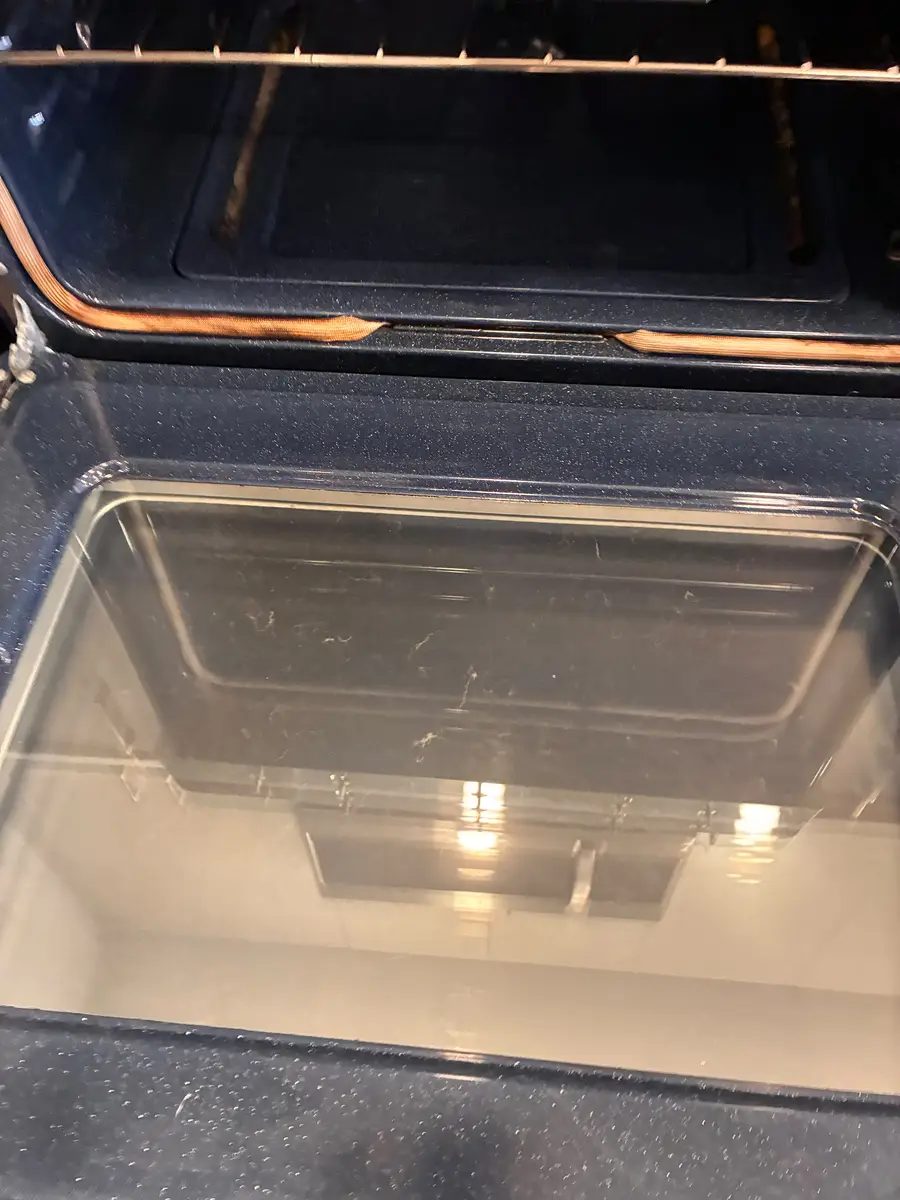
A really dirty oven is one of the jobs people put off the longest. The grease builds up a little every time you roast or bake, the spills on the bottom burn into black spots, and the glass on the door turns brown until you cannot see the food inside. By then, a quick wipe does nothing.
Ovens are one of the most common requests in Josiane Santos's deep cleaning work, and some of the most satisfying before and after photos she has. This guide shares a safe method that relies on time instead of strong chemicals, plus how to handle the racks, the door glass and the self-clean question.
Before you start: safety first
Make sure the oven is off and completely cool. If it is electric, keep anything wet away from the heating elements and do not spray water on them. If it is gas, do not get paste or water into the gas ports or the igniter at the bottom or back of the oven.
Open a window or turn on the range hood fan. Even mild cleaners can release smells when they hit old burnt grease. Wear gloves, since a long session with baking soda paste can dry out your hands. And check your oven's manual first, because some ovens have special coatings or enamel that the manufacturer wants cleaned a certain way.
Step one: take everything out
Remove the racks, any pizza stone, thermometer or foil. Many people line the bottom of the oven with foil to catch drips, but foil can damage some oven floors and block airflow, so it is worth checking the manual before putting it back.
Use a dry brush or a plastic scraper to loosen and sweep out the burnt crumbs and flakes on the oven floor. Vacuum them out if you can. Removing the loose material first makes the paste work much better on what is left.
Step two: the baking soda paste
Mix about half a cup of baking soda with a few tablespoons of water until you get a spreadable paste, like thick frosting. Add more water a little at a time if it is too dry. For a very dirty oven, make a bigger batch.
Using gloved hands or a soft spatula, spread the paste over the bottom, the sides and the back of the oven, avoiding the heating elements, the gas openings and the fan. Put a thicker layer on the darkest spots. The paste will turn brown as it absorbs grease, which is a good sign.
Now wait. Let the paste sit for at least several hours, and overnight if the oven is very dirty. Time does most of the work here, softening the baked on grease so it lifts instead of needing hard scrubbing.
Step three: wipe, spray and finish
Use a damp cloth and a plastic scraper to wipe out the paste and the loosened grease. Rinse the cloth often. For spots that stay stuck, spray a little white vinegar on the remaining baking soda. It will foam, and that reaction helps loosen what is left. Scrub gently with a non scratch sponge.
Wipe the whole interior with clean water until no white residue remains, then dry it. Leftover baking soda can smoke or leave a film the next time you cook, so take the time to rinse well.
Cleaning the racks and the door glass
Oven racks are easiest to clean in a bathtub or a large sink. Lay an old towel on the bottom to protect the tub, put the racks in, cover them with hot water and a squirt of dish soap, and let them soak for several hours or overnight. Then scrub with a stiff brush or a non scratch scouring pad, rinse and dry.
For the door glass, spread a thin layer of baking soda paste on the inside of the glass, let it sit for twenty to thirty minutes, then wipe it off with a damp cloth and a plastic scraper. Finish with a glass cleaner or a vinegar and water spray. Brown streaks between the two panes of glass are inside the door and usually need the door taken apart, which is a job to leave to the manual or a repair technician.
What about the self-clean cycle?
Many ovens have a self-clean setting that heats the oven to a very high temperature to burn residue into ash. It can work, but it comes with tradeoffs. It produces smoke and strong smells, especially on a very dirty oven, and the high heat can be hard on some ovens. Manufacturers usually recommend removing the racks first.
If you use it, follow your oven's manual closely, ventilate the kitchen well, keep pets and anyone sensitive to smoke away from the kitchen, and never leave the home while it runs. For heavy buildup, many people prefer to remove the worst of the grease by hand first.
When to let someone else handle it
A very dirty oven with racks and glass can take hours of soaking and scrubbing. It is often the task that tips people from doing a deep cleaning themselves to booking one. Josiane includes the oven in deep cleanings and move out cleanings on request, along with the microwave, the refrigerator and the cabinets.
If you are in Boston, Cambridge, Framingham, Ashland, Mansfield or nearby, text or WhatsApp (954) 482-8268 with a photo of the inside of your oven and get a quote by text.
Frequently asked questions
01What is the safest way to clean a really dirty oven?
A baking soda and water paste left on for several hours or overnight, then wiped off with a damp cloth and a plastic scraper. A little vinegar spray helps loosen any stubborn spots.
02Should I use the self-clean cycle on a very dirty oven?
It can work, but it creates smoke and smells on heavy buildup and the high heat is hard on some ovens. Follow the manual, ventilate well, and consider removing the worst grease by hand first.
03How do I clean oven racks?
Soak them in a bathtub on an old towel with hot water and dish soap for several hours, then scrub with a stiff brush or non scratch pad, rinse and dry.
04Is the oven included in a deep cleaning?
It can be added to a deep cleaning or a move out cleaning on request. Mention it, and send a photo if you can, when you ask for a quote.
Related services
Serving
Found this helpful? Make us a preferred source on Google.